Essential Need
Transition Engineering starts with the essential need. This could be sustenance, getting to work, the school run, thermal comfort at home, affordable electricity etc
Transition Engineering Ireland
We know the kind of future we want — sustainable, resilient and nature-positive. What is missing is a practical way to redesign today's complex systems. Transition Engineering provides that methodology.
The Transition Engineering Approach
Systems thinking is stepping back to see the whole picture. Instead of asking "How do we fix this part?", it asks "How do all the parts work together?"
Transition Engineering starts with the essential need. This could be sustenance, getting to work, the school run, thermal comfort at home, affordable electricity etc
By examining the problem from different perspectivs, the full extent and scope of the problem is revealed to all stakeholders
Examine the past to see how the problem developed, crash test the business-as-usual trajectory, imagine a future where the problem has been resolved
Develop credible changes to the system that can be implemented now to move the system towards that future
History
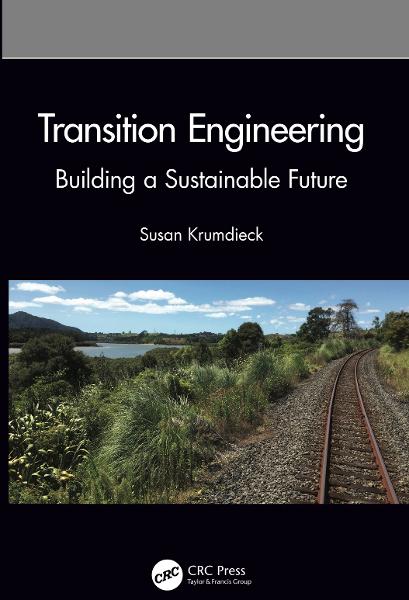
Transition Engineering was developed by Professor Susan Krumdieck and is an emerging engineering discipline with a dedicated textbook, university courses and professional workshops. It continues to expand internationally as educators and practitioners apply its methods to complex transition challenges.
The Textbook
Transition Engineering Quick Intro
Transition Engineers also facilitate workshops with organisations, businesses, executives, local authorities and community groups to investigate complex ("wicked") problems and identify practical, evidence-based transition pathways.
Education & Workshops in Ireland
We provide guest lecturing in Ireland in Systems Transition via Transition Engineering
Full module has been developed on Systems Transition based on the Transition Engineering course being taught in Heriott-Watt University, Scotland
We carry out Systems Tranistion workshops on Wicked Problems in Ireland
Case studies
Energy system
Core problem unveiled after Transition Lab: Oil companies are transport companies and are under-charging for their transport product (pretrol, doesel)
Intervention: Transition Engineers modelled the cost-benefit of an oil company building out and running an electric rail network, where the oil company is remunerated with each passenger ride.
The Home
Core problem unveiled after Transition Lab: Thermal comfort became something one purchased rather than providing onceself, resulting in people unlearning how to lfie in a changing thermal environment
Intervention Transition Engineers have rebuilt the "hearth of the home" as a retrofit using verncacular materials to provide thermal comfort in one section of the home in warm and cold weather.
Food
Core problem unveiled after Transition Lab: Access to local nutritious food has broken down
Intervention: Transition Engineers are building information infrastructure enabling producers to communicate their farming practices directly with consumers, incentivising local food production, processing and consumption.
About & Contact
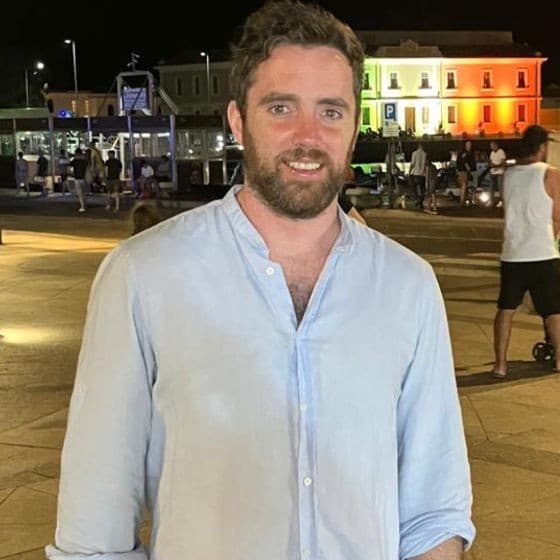
Im a farmer and energy transition researcher with a background in data science. In recent years, I became increasingly aware of the troubled energy transition as it slowly dawned on me that all the systems around us that we rely on - food, transport, cities etc - cannot, in their current form, be powered by wind and solar. But not phasing out fossil fuels wasn't an option either.
Broadly I was coming across two main camps: the first camp said that all our systems could be easily be powered by wind and solar - and that we could carry on living just as we are - we just needed the will to switch.
The second camp said it was hopeless. That the systems we rely on will collapse once a critical combination of climate change, biodiversity collapse and fossil fuel depletion was reached.
But there was a third, much smaller camp describing what a sustainable world powered by wind & solar would actually look like, encapsulated, for me, by Richard Heinberg's book Our Renewable Future. That book described in honest, realistic terms what that world would look like. Needless to say, it wouldn't look anything like the one we live in. But it comes with many of the skills and benefits we once enjoyed before they were crowded out by fossil fuels: a revival of craftsmanship, real social interactions, a deeper connection with the land and food, a more equitable economic system.
What was missing, for me, was the 'how'. If this future was possible, how could society actually get there? That's when I came across Susan Krumdieck's book Transition Engineering. It outlined a structured way of tackling unsustainability directly, and, most importantly in my view, a way of revealing the entirety of the problem to all stakeholders from a whole-systems perspective.
I have since collaborated with Susan and taught the first Transition Engineering module in Ireland at Griffith College, Limerick, in June 2026.
Today I provide guest lectures, teaching resources and Transition Engineering workshops to help bring this emerging discipline to Ireland. If you'd like to introduce Transition Engineering into your university, organisation or community, I'd be delighted to hear from you. You can email me at markkelly1983@yahoo.co.uk.
You can also connect with me on LinkedIn.